Full-Frame Window Replacement in The Woodlands, TX
Everything comes out down to the rough opening, so what's behind the trim gets fixed instead of hidden. The right answer when frames are rotted, sills are soft, or the opening was never square.
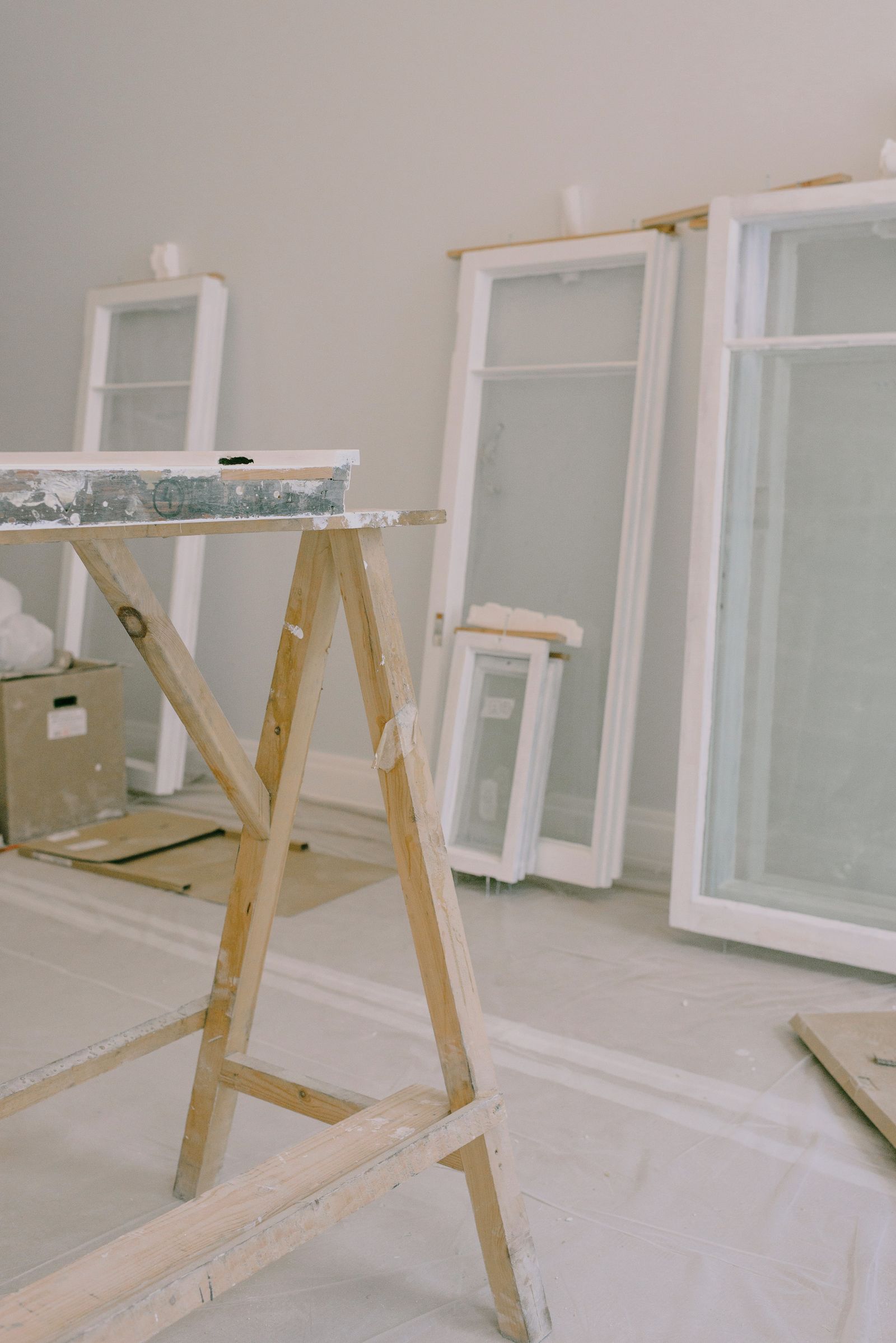
What full-frame replacement actually means
Full-frame replacement removes the entire existing window assembly — sash, frame, sill, and the interior and exterior trim — leaving the bare rough opening. Nothing is left in place to hide behind.
With the opening exposed, we inspect the framing, the sheathing and the sill plate. Anything soft, rotted or water-stained gets repaired or replaced before a new unit goes anywhere near it. That step is the whole reason this method exists.
Then the new unit is set square to the actual opening, flashed into the water-resistive barrier, insulated around the perimeter, sealed inside and out, and trimmed to finish. You get a window that fits the hole your house actually has, not the one the plan said it should have.
Signs you need full-frame, not an insert
An insert window keeps the existing frame. That only works when the frame is genuinely sound. Here is what tells us it isn't.
Soft or spongy sills
If a screwdriver sinks into the sill, the wood is gone. An insert set on top of it will fail with it.
Water staining below the window
Drywall staining or peeling paint under the sill means water is already getting past the assembly.
Visible rot in the exterior trim
Rot rarely stops at the surface. Opening the trim is the only way to see how far it has travelled.
An opening that was never square
Older builds settle. An insert squeezed into an out-of-square frame will bind, leak air, and never operate right.
You want your full glass area back
Inserts sit inside the old frame, so you lose an inch or two of glass on every side. Full-frame gives it back.
Mixed or failing materials
Aluminium frames, rotted wood and old caulk patched together are a sign the assembly is at the end of its life.
How we do it
One opening at a time, so your house is never standing wide open.
Protect and remove
Floors covered, landscaping protected, then the full assembly comes out — sash, frame, sill and trim.
Inspect and repair the opening
We photograph what we find and show you before we fix it. Rot, soft framing and failed sheathing get replaced.
Set, flash and insulate
The unit is shimmed square, flashed into the weather barrier so water drains out rather than in, then insulated around the full perimeter.
Seal, trim and walk it with you
Sealed inside and out, trimmed to match, old units hauled away, and every window operated with you before we leave.
Why this comes up so often in The Woodlands
The older villages — Grogan's Mill, Panther Creek, Cochran's Crossing — are on their original 1970s and 1980s window stock. Four decades of Gulf-Coast humidity under a heavy tree canopy keeps frames damp for most of the year, and damp wood eventually gives up.
That is why we open more soft sills here than a contractor in a dry climate would. An insert over rotted framing looks finished on day one and fails quietly for years. If your opening needs full-frame, we will show you exactly why before you spend the money.
Full-frame questions
The four we get asked at nearly every measure.
You usually cannot tell from inside. We check the sill for softness, look for staining below the window, check the opening for square, and inspect the exterior trim. If all of that is sound, an insert is the cheaper and perfectly good answer, and we will say so.
Find Out What's Behind Your Trim
The free in-home measure tells you whether you need full-frame or whether an insert will do. Either way you leave with a written, itemised number.
Serving The Woodlands, Shenandoah, Oak Ridge North, Spring, Conroe and south Montgomery County